European Team Handball
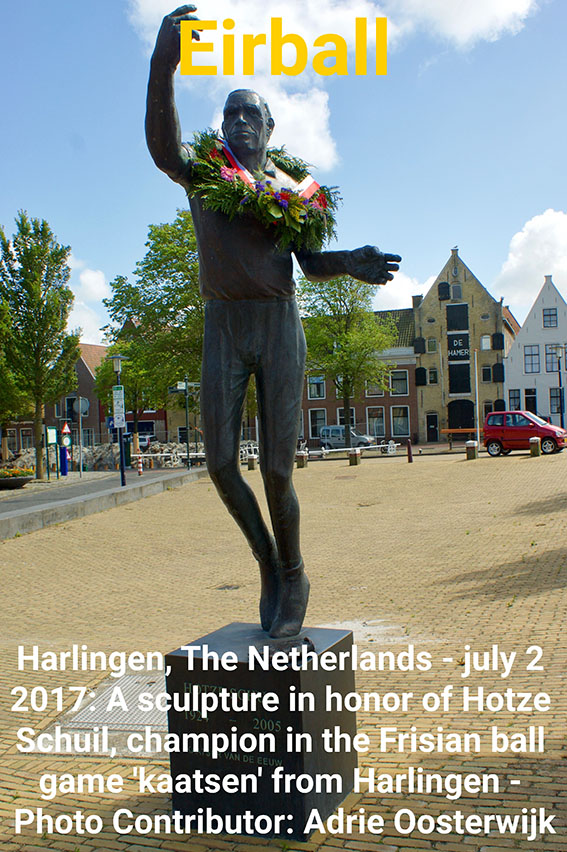
– Photo Contributor: Adrie Oosterwijk Harlingen, The Netherlands – july 2 2017: A sculpture in honor of Hotze Schuil, champion in the Frisian ball game ‘kaatsen’ from Harlingen
While Olympic Handball (also known as Team and European Handball) is the most recognisable version of European Team Handball globally, and the one played at the Olympic Games, the sport has its’ origins in earlier Team versions of the game around Europe.
Sports such as Eton Fives in England, Kaatsen in Frisia (Netherlands) and even earlier sports such as Hurling the Silver Ball (Cornwall) are the forerunners of Olympic Handball, and are still played to this day.
Eton Fives
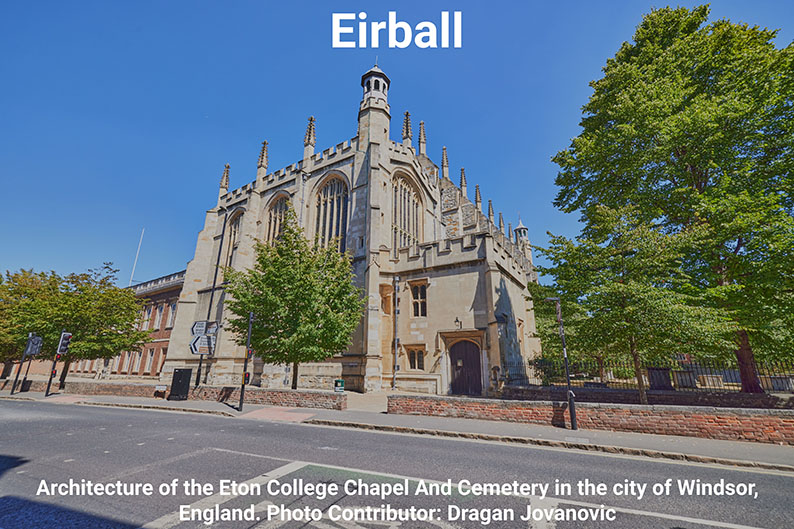
– Photo Contributor: Dragan Jovanovic Architecture of the Eton College Chapel And Cemetery in the city of Windsor,England.
Eton Fives is a variation on the game of Handball, first played in Ireland, and the origins of Eton Fives go back to Medieval Peasants playing the gamea against the wall of the chapel at Eton College, where there is a handrail down one side. The first court was built in Eton in 1840, by the Headmaster, Dr. Hawtrey. In 1877 AC Ainger drew up the first rules of the game.
Eton Fives Association
Photo Contributor: Dragan Jovanovic Architecture of the Eton College Chapel And Cemetery in the city of Windsor,England. [Internet] Available from: Architecture Eton College Chapel Cemetery City Stock Photo 2292696649 | Shutterstock [Accessed 20 December 2023][Edited for Eirball by Enda Mulcahy]
Eton Fives Association League (Overviews):
Cornish Hurling
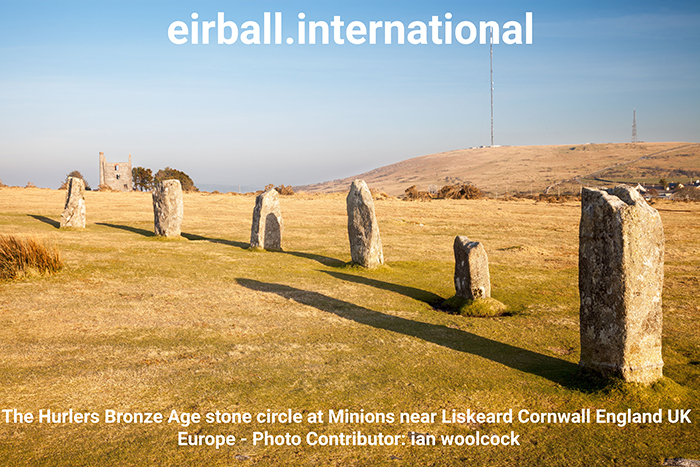
– Picture Credit: The Hurlers Bronze Age stone circle at Minions near Liskeard Cornwall England UK Europe Copyright: ianwool
Every Shrove Tuesday in St. Columb’s, Cornwall, the game of Hurling is played between ‘Town’ and ‘Country’. The night before resembles a ghost town as all the shops are boarded up and shuttered before the game is played the next day. There are no limits to the numbers of players in the game, with each player playing for either the ‘Town’ or ‘Country’. The game kicks off with the words “Town and Country do your best. but in this parish I must rest.”.
Traditionally, the game was played between the men of St. Columb, but is now played by the children. [3] The Game can last a few minutes or it can last hours depending on how quickly the winning team can get the ball to the goal. The winning player who carries the ball to the goal has the option of keeping the ball and paying for a new one by a local craftsman. The ball is constructed traditionally, out of silver with an applewood core, taken from a local orchard.
References: [1] BBC Cornwall (2003) Hurling at St. columb in the 21st Century [Internet] Available from; http://www.bbc.co.uk/cornwall/villages/stories/stcolumb_hurling.shtml [Accessed 7 March 2018]
[3] St. Ives Web Community TV (2013) The St. Ives Feast and the Silver Ball [Internet] Available from: https://web.archive.org/web/20130819100810/http://stivestv.co.uk/whatson/feast_day_2013.htm [Accessed 13 June 2019]
Cornish Hurling
Picture Credit: The Hurlers Bronze Age stone circle at Minions near Liskeard Cornwall England UK Europe Copyright: ianwool
Cornish Hurling (Hurling the Silver Ball):

Frisian Kaatsen
– Photo Contributor: Adrie Oosterwijk Harlingen, The Netherlands – july 2 2017: A sculpture in honor of Hotze Schuil, champion in the Frisian ball game ‘kaatsen’ from Harlingen
Kaatsen (Frisian Handball)
Photo Contributor: Adrie Oosterwijk Harlingen, The Netherlands – july 2 2017: A sculpture in honor of Hotze Schuil, champion in the Frisian ball game ‘kaatsen’ from Harlingen [Internet] Available from: https://www.shutterstock.com/image-photo/harlingen-netherlands-july-2-2017-sculpture-1590275968 [Accessed 20 December 2023][Edited for Eirball by Enda Mulcahy]
Kaatsen (Frisian Handball):
Kaatsen (Frisian Handball) Reference 1897-Present
KNKB Kaatsen Women’s Championship (Years):
KNKB Kaatsen Men’s Championship (Years):